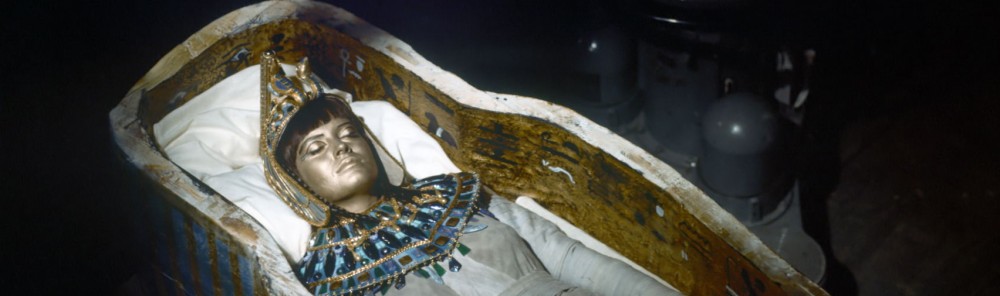
Moon of the Wolf (1972) – Stars, Location and Atmosphere

https://www.youtube.com/watch?v=LHu0Wcx0wCo

Given last week’s discussion of Barbara Rush, plus the revelation that my most visited post is Satan’s School for Girls (and with nearly twice as much interest as its nearest rival), I felt inspired to spend some time on Moon of the Wolf, another made-for-television horror film of the early 1970s.

It starts David Janssen, who was a titan of the made-for-television film and mini-series of the 1970s, until his death in 1980 at the age of 48. He had made his name as Richard Kimble in The Fugitive (in which Rush had made a notable appearance as a guest star), and he would also star in the detective series, Harry O, which I remember fondly and premiered on television the year after Moon of the Wolf. His tired, world-weary persona never really took off in cinema, but it proved irresistible to television.

He therefore starred in a whole series of things, although there are two mini-series that are particularly worthy of note. The first of which was Centennial (1978-1979), an absolute monster of the blockbuster television mini-series, which told the history of Colorado across two centuries and, in the process, had ambitions to being a microcosm of the American story. It even ends with major ecological questions about the future. In this monumental narrative, Janssen took the role of narrator, his gravelly voice acting as television’s ‘Voice of God’ in much the same way that Charlton Heston’s voice has come to operate in cinema.

The same year, he also became God’s voice (in a different way) in The Word (1978), a really interesting mini-series (and kind of television horror story), in which he is hired by publishers to check the veracity of a new set of biblical documents that seem to provide a first hand account of the Christ, and that might finally authenticate the story of Jesus. However, his investigations reveal a far more complex story that involves conspiracy and deceit, although his ‘truth’ is eventually rejected and the ‘fake’ documents are finally accepted as genuine. The effect seems to be no less than the creation of a new society based upon virtually universal faith; but also one that is as much a dystopia as a utopia, given that it is not only based on a lie but also on faith rather than doubt. Here, of course, Janssen’s persona is perfect for the final revelation and the whole story works around that familiar suggestion that it is the struggle with doubt that is ultimately meaningful and valuable, rather than blind or uncritical faith. The mini-series even implies that the ‘faith’ on which the new society is based is actually a kind of mindless conformity and the ends up feeling like something from a remake of Invasion of the Body Snatchers, or one of those Star Trek episodes where the crew of the Enterprise encounters a Utopia but decide that paradise must be destroyed in order to stop people wandering around in a blissful daze.

After discussing The Word, I am eager to re-see it and wish I was writing about that, rather than Moon of the Wolf, which really isn’t that great, although it certainly has its pleasures.

Anyhow, the story involves a body that is found badly mauled and the local sheriff (Janssen) starts to investigate. As suspects start to emerge, the nature of the attack looks increasingly strange and anyone in the audience who has any familiarity with this kind of thing soon begins to catch on (if the title hadn’t already alerted them) that a werewolf is on the loose. But who is it? Suspicion is directed at various characters, although the brother and sister of a wealthy, local family seem to be central to events. This couple is played by Bradford Dillman and – you guessed it – Barbara Rush.

Also, Rush and Janssen’s characters clearly have chemistry in the story, and one of the nice thing about 1970s television was that, unlike the cinema of the period, it was happy to provide roles for women like Rush who was in her mid-1940s at the time, roles in which they were not only leading ladies but were also supposed to be sexual beings with a past.

There isn’t a lot else to say about the plot, without giving the game away, but I should probably add that the creature effects are predictably awful (which never put me off a monster movie) and that the local color is excellent. Rather than simply being filmed in LA on studio lots, it uses a lot of Louisiana locations that give the rather slight story a considerable sense of atmosphere. Yes, there is a noticeable absence of explicit gore but that wasn’t what made-for-television horror films were all about. They excelled in atmosphere and suspense, qualities that are central to most of the classics of the type: Duel, The Night Stalker, etc.

And it is this quality that the stars also bring to the film. Janssen was capable of drenching a story with atmosphere without appearing to doing anything – not talking, moving, or anything at all. Similarly, Bradford Dillman is a fantastic character actor who was everywhere in the 1970s (he even ends up in Joe Dante’s wonderful Piranha)  but has never seemed to get the credit that he deserves. He seems to have a permanent aura of self-disgust born of corruption or compromise, an aura that works perfectly in this story. Oh, and Barbara proves fascinating, too – obviously – and she conveys a peculiar mixture strength and vulnerability (or should I say fragility). After my last entry, Kevin Heffernan (author of the wonderful Ghouls, Gimmick, and Gold) rightly observed on facebook that Rush ‘is a *huge* part of why Nick Ray’s BIGGER THAN LIFE works as beautifully as it does. Her quiet, terrified defiance of steroid-crazed patriarch James Mason is what keeps the film from tipping over into bathos and unintentional comedy’. He is absolutely right, and I love that phrase: ‘quiet, terrified defiance’. Anyhow, it is a similar balance of conflicting elements that makes her perfect for this story, too, so that it remains uncertain, right up until the final revelation, whether she is a potential monster or victim.

So, Hour of the Wolf is certainly no masterpiece but I have to recommend it for its sense of atmospherics, atmospherics that are largely due to its careful use of locations and its casting (in addition to the three main actors mentioned, the film is packed full of other great character actors).
https://www.youtube.com/watch?v=ErYsKd5fptc

Suspicion (1957-1958) – Continued: It’s A Rush!

BarbaraRushICFOSAVATAR

So I have now nearly finished the second half of Suspicion and it actually keeps getting better. Doomsday is a really interesting heist story with Dan Duryea and Charles Bronson that concerns a bank robber whose genius for disguise has ensured that he hasn’t been caught, but his ruthless detachment from the world proves his undoing. It is a really interesting psychological thriller that is full of lovely twists and ironies.

The Bull Skinner is also a fantastic psychological drama in which Rod Steiger’s workman, Frank, becomes filled with hate when he is passed over for promotion and a new man is given the job in his stead. Fueled with a desperate need to prove his manhood – his wife is unable to get pregnant – Frank initially accuses his rival of not being a real man and then, after being partially responsible for an accident in which the rival looses his arm, Frank becomes obsessed that the rival is out to get him. In the process, the Steiger’s initially sympathetic character mutates into a monster that alienates everyone, even his wife.

There is an okay Bette Davis vehicle that is based on a Du Maurier story, and another episode that features an often adapted Ronal Dahl story about a wife whose domineering husband meets with some poetic justice when she leaves for a trip abroad. However, the stronger items include a fabulous story of psychological backstage warfare in the The Protege in which Jack Klugman tracks down a legend of the theater whose alcoholism has driven her into obscurity, the really really wonderful Agnes Moorehead – you know, she is in a lot of Orson Welles but is best remembered (by me at least) as Samantha’s mother in Bewitched – now there was a role!

Klugman tries to bring her back to greatness and enlists William Shatner in the mission, but there is a evil protege (hence the title) who makes Anne Baxter’s Eve look positively warm and supportive. I won’t spoil it by saying anymore. But without any supernatural elements or criminal acts, this ends up a really rather terrifying story of psychological torture!

Death Watch is a good, but not outstanding, story in which Edmond O’Brien (D.O.A.) plays a detective who is guarding a female witness, only to find out that one of his team has been hired to kill her; and An Eye for an Eye features both a really nasty kidnapper and the first outing for Ray Milland’s suave detective, Markham, who got his own series shortly after. I love Ray Milland so I can’t see anything but good here. The episode also reminds me a lot of those interestingly nasty horror-thrillers of the early sixties such as Cape Fear and Experiment in Terror (a really good horror film directed by Blake Edwards – honest go check it out!)

However, one of my favorites was The Woman Turned to Salt, in which a female divorce lawyer is called in to help a young woman who has fallen in love with an older man, a right smoothy played by the wonderful Michael Rennie (Klattu from The Day the Earth Stood Still). Right from the off, the lawyer knows that something is wrong with this older man but no one who has seen this sort of thing before needed her to give foreshadowing of the plot. Anyhow, to cut a long story short, he is an artist (usually a clear sign that something is wrong); he has designed his own house; and he can’t stop painting one of the pillars in his immaculately designed pergola. Oh, and did I mention that there was some mystery about his first wife.

I am not saying its a work of genius or anything but its a very nice, atmospheric little number.

However, I am going to claim genius for A Voice in the Night, which was based on a story by William Hope Hodgson and has one of those casts that only a late 1950s television series can muster. With only four actors in the entire episode, this episode manages to combine the talents of Patrick Mcnee (Steed from The Avengers) as a quite wonderfully preposterous sea-captain, with a bushy beard and everything; James Coburn as his mate (there don’t seem to be many people on this particular sailing ship); James Donald, one of those great British actors who plays a stiff upper-lip types in things like The Bridge on the River Kwai and The Great Escape; and, finally, the ever wonderful Barbara Rush.

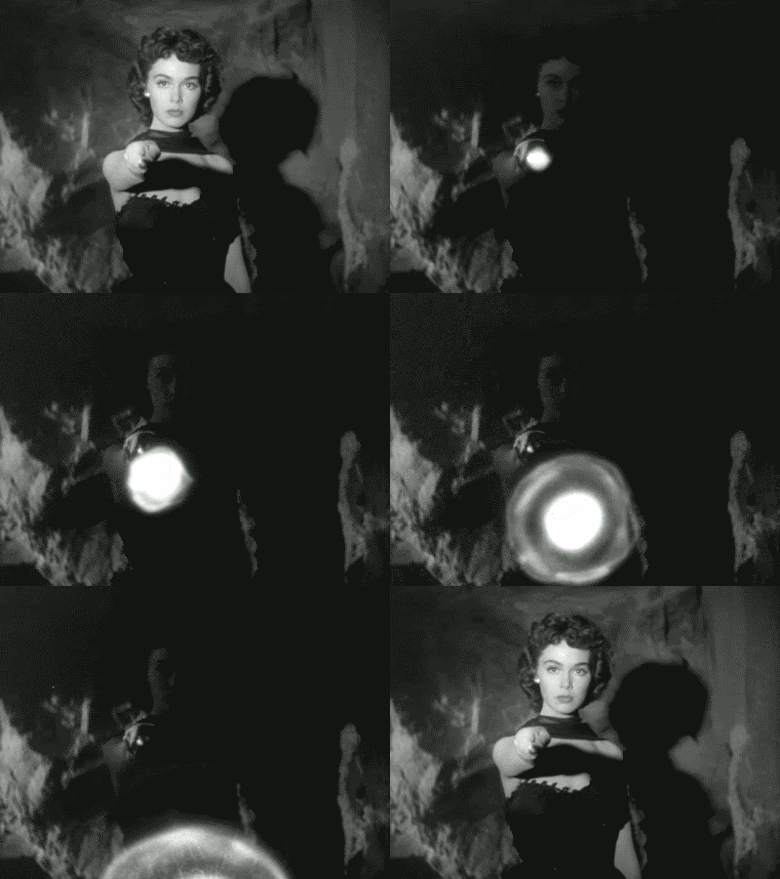
Ah, Barbara Rush, where do I start? She’s one of those great actresses from the 1950s who, along with Julia Adams, another favorite of mine, plays incredibly beautiful heroines, who are determined not to be left out of the action. It’s hardly surprising, then, that she was later cast in Batman as Nora Clavicle, a ‘feminist’ whose ‘Crusade for Women’ manages to oust Commissioner Gordon and replace him with Clavicle herself (see below). Also, in the early 1950s, when the science-fiction-horror film provided numerous roles for female scientists and other figures of public femininity, Rush had the opportunity to play a number of roles. (Is it just co-incidence that in the revival of The Outer Limits during the 1990s, she is cast as a character called Barbara Matheson?) For example, she’s wonderful as the heroine in When Worlds Collide and It Came from Outer Space (see above) but, in A Voice in the Night, she excels herself.

At the start of the episode, Mcnee and Coburn find themselves becalmed in a fog, and are then surprised to hear a voice coming from the mist. The voice begs for food but insists that a) they remove all lights and b) they send out the food without making physical contact. Of course, Coburn becomes suspicious but Mcnee is more sympathetic and curious. Anyhow, a short while later, having taken food to his ailing female companion, the voice returns and tells a strange story….

James Donald is the voice and his character had been a sea-captain, who had married a beautiful young woman (Barbara Rush). However, once married, she refused to stay at home and play the waiting wife but rather insisted that they travel the world together, sharing adventure, fortune and hardship. Nor is she some misguided fool, who is punished for refusing to accept her lot in life, and she clearly thrives during her life on the high seas, at least until the two are shipwrecked and left drifting at sea.

Eventually, they find an old ship that is covered in a strange fungus and total deserted; and, as they try to solve the mystery of the missing crew, the couple become aware that, although it looks as though the ship has been deserted for years, it has only been left for a few months. They also start to realize that no matter how much they try to keep the ship clean, the fungus keeps coming back at an alarming rate.

Eventually, they leave the ship for an island near by, only to find that this is completely over-run with the fungus and has no other form of animal or plant life. Eventually, they make camp on a patch of beach where, for some reason, the fungus can’t get a purchase, and they begin to plan ways of being rescued. However, when the fungus begins to grow on their skin, they acknowledge that they can never return to the world for fear of bringing the fungus with them.

Finally, at the end of the episode, having told this story, Mcnee and Coburn have a final revelation which I won’t spoil for you.

Along the way, the story explores the relationship of this husband and wife, and Bach’s character makes the issues more explicit when she discusses their situation as a kind of test, where people find out about the substance of their own selves and their relationships. But while this might have resembled Beckett’s Waiting for Godot or Sartre’s No Exit, their story is one of bravery and love. The two share this situation because of their refusal to be separated into the spheres of man and woman, home and public life, and their decision to live life together in the world. But each time Donald proposes that they reverse this decision and attempts to adopt the role of masculine protector in relation to his wife, she not only rejects his attempts but she seems justified in her views. Rather than being punished for their decision to conform to the separation of spheres, their relationship and their reaction to the horror prove the rightness of that decision.

Anyhow, A Voice in the Night was, for me, the best of the series, and actually one of the best things that I have seen in a long time. Its imaginative, atmospheric, with wonderful characters and a really rich psychological dynamic. Its also that rarest of things: haunting. Oh, and it’s got Barbara Rush in it.

http://www.youtube.com/watch?v=cqZ_g7s8sHQ

Suspicion (1957-1958) – Short but Sweet

It has been one of those weeks. I had to do an entry for another blog, which was arguably on television horror – television weather reporting:

http://cstonline.tv/weather-or-not

Consequently, I haven’t had much time to write an entry for this week. However, I didn’t want to neglect my duties, so I thought I would make a few brief comments about Suspicion which I have been watching this week. It is a bit variable in quality. Some things are great but others, including an episode starting Audie Murphy, The Flight, are disappointing, or even a bit dull.

Part of the reason for the variable quality is that the talent seems to shift around a lot. Some episodes are produced by William Frye, who would make Boris Karloff’s Thriller and some are produced by Joan Harrison, who was also producing Alfred Hitchcock Presents at the time. In fact, Alfred Hitchcock was also associated with the series as an executive producer, and directed the first episode of the series, Four O’Clock.

In this story, E.G. Marshall thinks his wife is cheating on him and plants a bomb in his cellar to kill her and her lover. Unfortunately, small time crooks break in; and bind and gag him in the cellar along with the bomb. He is then forced to wait helplessly until four o’clock when he has set the bomb to go off. I won’t reveal the ending but the story basically follows his hopes and fears as he tries to attract attention to himself and to his predicament. It is therefore an incredibly simple exercise but one that is all the more impressive for its simplicity. Also, given that Marshall is mostly bound and gagged during the episode, his thought processes have to be conveyed through voice over in a manner that is very familiar from radio horror shows – whether Four O’Clock had previously been given a treatment in radio horror, I have not been able to find out yet. If anyone knows about this, I would be eager to hear.

Other episodes that I have really enjoyed include The Other Side of the Curtain in which Donna Reed keeps having a bad dream about something that lies on the other side of a curtain, but she can’t quite remember what; and is then accused of murdering her husband’s previous wife. Okay, so people act in ridiculous ways in the story, but frankly I don’t really care. Its a really neat little thriller and there is something genuinely eerie about her dreams and the tantalizing mystery beyond the curtain….

Heartbeat is also great and features David Wayne as a meek middle aged man who has suffered from a weak heart from childhood. However, when he is (mistakenly) told by a heart specialist that there is nothing wrong with his heart, he spends the day in search of excitement; while the doctor who has given him the wrong diagnosis enlists the police in a search for the thrill seeker so that they can warn him that any excitement might kill him. Again, I won’t spoil the ending but its a wonderfully bitter-sweet story packed with mounting suspense and some terrific documentary-style film-making in various locations, particularly Coney Island.

There is also a great little story, Rainy Day, featuring George Cole.

At its best, episodes of Suspicion are like hour long episodes of Alfred Hitchcock Presents. At its worst … well, I haven’t finished them all yet, but so far the worst has been watchable, if uninspired. However, when its good, its great, so it was a real find for me: I accidentally purchased it while trying to track down Suspense (1949-1954).

Satan’s School for Girls

https://www.youtube.com/watch?v=KYF8hOPm_qM&wide=1

Okay, so I just watched Satan’s School for Girls again, and what can I say. Its a knowing camp-fest that is produced by Aaron Spelling, who has done other horror productions: anyone remember Kindred: the Embraced in the mid 1990s? On the one hand, its really silly: the devil is on the loose in a girl’s school – the clue is in the title. On the other, its not quite silly enough – there is is a serious absence of the more obvious pleasures of this kind of nonsense. On yet another hand – okay, we are talking mutants with numerous hands here – its full of rather batty pleasures. Kate Jackson and Cheryl Ladd appear in pre-Charlie’s Angels roles, and while Cheryl is a major disappointment, Kate is perfect – but then she was always my favorite angel, so maybe I am just biased.

More importantly, it has various other iconic figures in various roles. The lead is the ever wonderful and perennially weird Pamela Franklin, who was wonderful as one of the children in The Innocents (1963), and was weird and creepy in various roles including non-horrors like The Prime of Miss Jean Brodie and horror-numbers such as The Nanny (with mad, bad Betty Davis), Our Mother’s House, And Soon the Darkness, and Necromancy (with madder, badder Orson Welles). However, its her role in the fantastic The Haunting of Hell House that will always stay with me – she is both creepy and sympathetic – and of course we are back in Richard Matheson territory. I am beginning to worry that this is turning into a Richard Matheson appreciation blog, not that this would be a bad thing.

Along with Franklin, there is also Roy Thinnes as a charismatic teacher who is trying to open up the kids’ minds (it is the early 1970s, when teachers still had notions about such things), but I think I will spare you much more about Thinnes for now, an actor who seems to be turning up in these posts with nearly as much regularity as Matheson. Finally, there is also Lloyd Bochner, or Cecil Colby from Dynasty, an actor with a voice that always reminds me of Orson Welles (see earlier posts) and has a long and distinguished career in horror. To be honest, his CV would make a a truly impressive list, and one would be hard pushed to find an example of a classic American television series that he hadn’t been in – Love Boat, Fantasy Island, you name it. None the less, he would also memorably appear in various examples of horror, such as Bloch’s The Night Walker, Boris Karloff’s Thriller and The Twilight Zone, a role which has become one his most fondly remembered – he even spoofed it in one of the Naked Gun films…

I am not sure that I am actually recommending Satan’s School for Girls. Its not The Night Stalker. Its not even Curse of the Black Widow. And it probably is representative of what Gregory Waller hates about the made-for-television film (although it still doesn’t fit many his actual claims about it). But it is also filled with hokey pleasures – and clearly borrows heavily from the female Gothic (borrowing here being tantamount to travesty), with its female investigator who solves the mystery, and its rather banal excuse for a climax in which the contemporary characters all investigate the mystery while holding oil lamps like something from a nineteenth century melodrama – hey, there’s been a power cut!

The Strange Case of Dr. Jekyll and Mr. Hyde (1968)

https://www.youtube.com/watch?v=qBq_O62YJy8

I recently rewatched Dan Curtis’s 1968 adaptation of The Strange Case of Dr. Jekyll and Mr. Hyde, and found it surprising in a number of ways. I had remembered it as a (largely) faithful adaptation of the original story, and one that was concerned to demonstrate respectability and restraint. However, rewatching it, I was struck by how distinctly unfaithful it was; how it was explicitly intended as a re-interpretation of the original story. I was also struck by how much it didn’t feature the production values of later made-for-television films, but looked instead like a BBC quality drama of the period. It seems to have been entirely shot in the studio and looks very stagey.

Not that being stagey is a problem here. The film actually has that tight, closed claustrophobic feel that studio-shot television drama can create, and rather than simply feeling low budget, the stageyness actually works well with the horror material. The lack of naturalism in the sets somehow works with the fantastic elements of the story, and makes the monster look less ridiculous – it was often a problem in the late 1960s and 1970s that horror monsters were frequently dumped into settings that were modern and/or  naturalistic, a context in which the monster could look quite odd. Certainly this juxtaposition could be used to great effect, as in The Night Stalker, or the fabulous Time After Time, in which Jack the Ripper escapes from 19th Century England to 1970s San Francisco (using H. G. Welles’s Time Machine) where he finds that he fits right in (‘ninety years ago I was a freak; today I’m an amateur’); but this juxtaposition could also seem incongruous, as in Hammer’s Dracula A.D. 1972 (although I must admit a fondness for The Satanic Rites of Dracula, which seems to neatly side step the problem).

However, The Strange Case of Dr. Jekyll and Mr. Hyde is also notable for its interpretation of the story, which starts with an idealistic Dr. Jekyll being attacked by his blinkered fellow scientists, but soon starts to demonstrate that Jekyll may actually be the problem. While adaptations often present Jekyll as an idealist who looses control over his experiment, this adaptation actually ends up blaming Jekyll and presenting Hyde as his creation. It makes considerable efforts to demonstrate that Jekyll uses Hyde to act out his desires, desires that he can’t act upon or acknowledge as Jekyll. Hyde is not the dark half from which the idealist cannot escape; but that which the idealist creates to disown his desires.

Indeed, the story both opens and closes with a line from Delvin (Jekyll’s lawyer) which undercuts the normally idealistic claims of Jekyll’s research: ‘It has been said that many men find their way from the valley of violence to the palace of wisdom; but if all men must learn wisdom tomorrow through violence today, then who can expect that there will be a tomorrow.’ Jekyll may attain wisdom in the end (which is questionable anyhow) but his science is violent and destructive, and may involve an irresponsibility that threatens the very future of humanity. At the end, Delvin even reverses the normal values of the story when Hyde seeks to preserve himself by warning Delvin that ‘if you kill me, you’ll be killing Henry Jekyll’, a warning that Delvin dismisses in a most surprising way: ‘You don’t understand, do you? Jekyll deserves to die – he’s the one who’s responsible, not you.’

The adaptation is full of great performances, too. Jack Palance’s Dr Jekyll is terrific, and my only complaint is that the Hyde make up is a disappointment, and that Palance could probably have pulled off a wonderful Hyde (that was clearly distinct from his Jekyll) without the use of any make up. Billie Whitelaw (who at the time was regularly appearing in Samuel Beckett plays on the British stage and, whom the playwright referred to as ‘the perfect actress’) gives a wonderfully subtle and complex portrayal of a ‘dancer’ who becomes the center of Hyde’s villainous obsessions. Its worth watching the film if only for her confused emotions. Oh, and along the way we have various excellent turns by others, including the ever wonderful Denholm Elliot as Delvin.

In short, this is a really interesting made-for-television horror film and if you haven’t seen it, I would strongly recommended it and, if you have, it may well deserve another look.

Dan Curtis

Dan Curtis has had a wonderful and diverse career but it is as a producer of made-for-television horror films that I most admire him. While working as executive producer for Dark Shadows, he produced his first made-for-television horror film, an adaptation of The Strange Case of Doctor Jekyll and Mr Hyde (1968) starring Jack Palance. In 1970 and 1971 respectively, he then made two film versions of Dark Shadows, House of Dark Shadows and Night of Dark Shadows, after which he returned to television with the fabulous made-for-television horror film, The Night Stalker (1972).

These various examples represent the key features of Curtis’s productions. If Dark Shadows was Gothic and campy, Curtis’s later productions can largely be divided into two key types. On the one hand, there were a series of Gothic adaptations, along the lines of The Strange Case of Doctor Jekyll and Mr. Hyde, and on the other were a series of films in which classic monsters (vampires, werewolves, etc.) prowl the twilight zones of contemporary America. If the first type usually sought to evoke a sense of literary prestige, restraint and respectability, the second were less restrained and often humorous or campy.

Following The Night Stalker, Curtis made a rare excursion into the female Gothic with The Invasion of Carol Enders, in which a young woman is possessed by the spirit of a murder victim; but soon returned to type with a sequel to The Night Stalker, The Night Strangler, a film that borrowed heavily from horror classics such as The Man in Half Moon Street (1945: which was later remade by Hammer as The Man Who Could Cheat Death, 1959), and featured a man preys upon the living to prolong his own life.

The success of these productions lead to The Norliss Tapes, which seems to have been designed as the pilot for a television series that was never made (unfortunately), and featured Roy Thinnes (from The Invaders) as an investigator into weird paranormal cults. Certainly there are preposterous things the movie but Thinnes has a wonderful presence and the device of telling the story through taped recording that he has made and are the only clue to his ‘disappearance’ helps create a real sense of atmosphere, mystery and menace.

An adaptation of The Picture of Dorian Gray followed as did another modern day horror story, Scream of the Wolf, and adaptations of both Dracula and The Turn of the Screw. But by the late 1970s, Curtis was beginning to diversify his made-for-television horror productions. Both Trilogy of Terror and Dead of Night were anthologies that featured several different stories but Curse of the Black Widow was yet another monster on the loose in contemporary America.

However, by the early 1980s, Curtis had moved into the production of prestigious historical mini-series such as The Winds of War and War and Remembrance, although he would also receive credits when Dark Shadows and The Night Stalker were briefly revived on television.

However, it is for his productions of the late 1960s and 1970s that he will be best remembered and it is an impressive body of work. Although the films associated with Richard Matheson, who wrote many of his made for television films, are the most respected examples, some of his other films have their own pleasures. I have a particular fondness for Curse of the Black Widow, which has a kind of weird, batty charm – hey, it stars Patty Duke (Neely O’Hara from Valley of the Dolls) and Donna Mills (Abby from Knot’s Landing) as rival sisters, one of whom also finds that she is cursed to become a killer spider at regular intervals! The question is: which one? The other question is of course: how can you resist such a premise? I know that I can’t.

http://www.youtube.com/watch?v=9F_TjFADGUU

Made-for-Television Horror Films

http://www.youtube.com/watch?v=QPGlYeZCK2g

The made-for-television horror film is an odd object. It gets a fairly dismissive treatment in Greg Waller’s essay on the subject (in his collection American Horrors) where he claims that it is preoccupied with the ‘child-less, married woman, twenty to twenty-five years old, who is before all else identified as a wife’ or the figure of the ‘psychic investigator’. Of course, the latter type is a rather strange one to take issue with as it includes examples like the rather wonderful exploits of figures such as Carl Kolchak, the protagonist of Matheson’s truly wonderful made-for-television horror film, The Night Stalker, which most people agree to be a classic (and not just a classic of television horror but of horror more generally)!

The former type is also interesting but in a different way; and is based on an explicit preference for stories that do not ‘overwhelmingly adopt a narrative form based on the personal adventures of an individual protagonist or small group’ and in which ‘the horror is [not] localized, identified as a single incident’. However, this preference is also a gendered response. In other words, this response relies on an established options between the public and the private, in which the public is seen as ‘properly social and political’ while the private is ‘relegated to the realms of “escape”‘, the realms of the ‘localized’ and the ‘individual’. However, as Angela Partington claims, such a distinction is ‘a consequence of the critic’s class and gender-specific notions of’ politics, a notion that is quite at odds, for example, with ‘experience of working-class women’ for whom the social and political are experienced as precisely ‘private and emotional’ and vice versa: the ‘private and emotional’ are therefore deeply social and political.

Furthermore, such a position seems to oddly reject precisely those kinds of narratives that one might see as heirs to a long tradition of female Gothics. Consequently, if Waller is right about its prominence within made-for-television horror film, this category would benefit from a lot more discussion, and I hope to return to this in later entries. However, I am not at all convinced that made-for-television horror films are dominated by such types and, even if they are, there are still a wide range of other types.

The Night Stalker and its sequel, The Night Strangler, were examples of the psychic investigator, as was The Possessed, a rather weird made for television horror film in which James Farentino plays a mysterious figure who wanders the earth confronting evil and finds himself battling dark forces in a girl’s school. However, there was also a series of classic horror adaptations produced by Dan Curtis. In The Strange Case of Dr Jekyll and Mr Hyde and Dracula (again written by Matheson) the terrifically tragic Jack Palance starred as the respective monsters, while The Picture of Dorian Gray and The Turn of the Screw were built around other actors.

It should also be remembered that Stephen Spielberg started off in television and that his first film, Duel, was a made-for-television horror film (yet again written by Matheson) that was only given a theatrical release after its reception on television. The film tells the story of an ordinary man who, while traveling across country in his car, is menaced by a mysterious truck.

In short, there is a rich and diverse body of work within the made-for-television horror film. Some examples, such as The Possessed, are preposterous but fun. Others such as Duel or The Night Stalker are acknowledged as classics. And yet others, if Waller is right, represent a prolific, if largely forgotten, body of female Gothics.

Of course, the made-for-television horror film is very different from the made-for-television mini-series which I will discuss on another occasion but is another rich tradition that includes examples such as The Dark Secret of Harvest Home and numerous adaptions of Stephen King novels including Salem’s Lot (twice), It, The Tommyknockers, The Stand and The Shining. But that is for another day.

http://www.youtube.com/watch?v=pnHjfGaN3kw

Murder, She Wrote (1984) – No Really!

I know that it surprises people, but I have always been a sucker for Murder, She Wrote. There is something that I find compulsively comforting about the show.

Of course, some people will object that it’s not horror and, while I would concede that it’s not exactly fantastic, except in the sense that it is fabulous, the show was closely related to horror from the first, if only through its association with a version of horror that we have tended to forget. In the 1940s, when Angela Lansbury became a star (Angela plays the show’s amateur detective, Jessica Fletcher), the horror genre clearly included murder mysteries so that the Sherlock Holmes series (with Basil Rathbone and Nigel Bruce) was understood as a horror series, and even Rene Clair’s film version of Agatha Christie’s And Then There Were None was explicitly seen as a horror film: it was even given its New York City premiere on Halloween.

As if to illustrate the point, the first episode of Murder, She Wrote starts with what appears to be a staple of the 1940s horror film, the Gothic (or paranoid) paranoid woman’s film. The episode opens with a young woman in a nightgown who is cautiously climbing the staircase of an old house while carrying a candlestick, a woman who is suddenly surprised by an axe-welding man at the top of the stairs. Of course, it is then revealed that we are actually watching the rehearsal of a play, the mystery of which Jessica has already solved (she is has gained admission to the rehearsal for reasons that now escape me).

Furthermore, in this first episode, Jessica is writing the novel that will make her famous as a mystery writer, a book whose title also emphasizes that the series is making no distinction between the detective story and the horror story. Her novel is called, The Corpse Danced at Midnight, and when she goes to Hollywood later in the season to complain about a film producer’s adaptation of her novel, she does not object that it is being turned into a horror film, but into an ‘low-budget’ horror film that is directed at teenagers.

All of which should be unsurprising, given the casting of Angela Lansbury, a fascinating actress with a long and illustrious association with horror. Her breakthrough was in the now classic 1940s horror film, Gaslight, in which Ingrid Bergman is tormented by her completely bonkers husband, Charles Boyer. Although she was only seventeen at the time, and this was her first film role, she was nominated for an Oscar in the role; and was quickly cast in another horror film the following year, MGM’s hugely expensive film version of Oscar Wilde’s The Picture of Dorian Gray. Many of her most famous film roles have similarly played on this association with horror and she was brilliantly cast as the evil mother in The Manchurian Candidate. This is a really chilling portrayal in a film that is as much a horror story as is a political thriller; it was after all made in 1962 only two years after another film about a young man who is psychologically dominated by his mother – Norman Bates in Psycho.

Furthermore, for reasons that I can’t even begin to speculate on, she has repeatedly been associated with horrific materials in child-related films (or films that were not always children’s films but played with the association between horror, children and fairy tales). She played a friendly witch in Disney’s Bedknobs and Broomsticks, the singing teapot (Mrs. Potts) in Beauty and the Beast, and also appeared in another story of witchery and childcare, Nanny McPhee. In a more adult context, she also played a rather sinister grandmother/storyteller in The Company of Wolves.

Even on the stage, where she became a major icon of the Broadway musical, she gave a celebrated performance as Mrs. Lovett in Stephen Sondheim’s Sweeney Todd: The Demon Barber of Fleet Street, the recent film version of which had Helena Bonham Carter in Angela Lansbury role.

Of course, I won’t try to persuade you that Murder, She Wrote is awesome – you will have to form your own opinions about that – but I love it. But Angela Lansbury is a different matter. If you haven’t discovered how awesome she is, you really need to do some research!

Teen Wolf (2011) – Subtexts that Hardly Qualify as Such

https://www.youtube.com/watch?v=EQapH9qEhck

Some years ago my friend Harry Benshoff published a book called Monsters in the Closet in which he explored various ways in which horror has been associated with homosexuality and homosexual desire. For example, he suggests that the monster has often been figured as a disruptive force that threatens the heterosexual couple. When I recently watched season one of Teen Wolf (I do a lot of commuting!), I was rather taken aback by the extent to which the series seemed to have taken this premise and run with it – big time. It is awash with homosexual subtexts, subtexts that hardly qualify as subtexts – its a bit like Garth Marenghi’s great line: ‘I know writers who use subtexts and they’re all cowards. Okay?’

The story starts with a nerdy young boy, Scott McCall, whose best friend, Stiles, is the best thing in the entire show – far better than Scott. Stiles seems to have been made out of all the best DNA from 1980s teen comedies (and particularly teen horror-comedies). Scott and Stiles are also the kind of best buddies who climb in and out of one another’s bedroom windows, but when Stiles hears about a savage attack by a strange beast in the nearby woods, he insists that he and Scott go there and have a look see. And, wouldn’t you know it, Scott gets bitten by the strange beast … whatever it is.

Then Derek appears, a young hunk but one who is no longer young enough to go to high school; and he warns Scott that the bite will change him into a werewolf and that Scott needs the guidance of an older male mentor so that he can make sense of what is happening. But Scott says, no way, he has fallen for the new girl in school, Allison, who is different from the others (for a start, she appears to be about ten years older than everyone else – even Derek).

But the question is: who is doing all the werewolf attacks. Is it Scott? Is it Derek? Or is it another, even older ‘alpha’ whose identity is unknown but who wants Scott and Derek to join his pack.

Oh, and there is also a high school jock, Jackson, who continually wears an expression of hatred and disgust that screams ‘homophobia born of repressed homosexuality’ – he initially hates Scott and then spends ages trying to have the gift of becoming a werewolf bestowed upon him – he thinks that it will give him an advantage in sports or something…

But the key narrative problem is that every time Scott starts to get romantic with Allison, his inner werewolf kicks in and he has to stop.

Of course, what matters is not whether the show has a homosexual subtext, but what it is trying to do with it. As Benshoff points out, the association between homosexuality and the monster is a very double-edged sword that has some very real pleasures and some very real problems. But I will leave it to you to read his work, which I strongly recommend. Instead, I want to suggest that the search for homosexual subtexts can also cut both ways. Just as much as there are serious attempts to explore the meanings of homosexuality (such as Benshoff), there are also numerous attempts to simply ridicule others as ‘sooo gay!’ In other words, the search for, and identification of, subtexts can either be used to undermine or reinforce notions of ‘normal’ masculinity – whatever that is!

So what is Teen Wolf doing? At one level, it seems to be clearly working towards the establishment of the heterosexual couple, but that is hardly a surprise and may be little more than a narrative of convenience – a pretext that allows the show to play with lots of other material. On another level, the show is also associated with Russell Mulcahy, whose films have long been an exercise in high camp. For example, he directed Highlander, Ricochet, The Shadow, and was even the director of Rambo III before being replaced by Peter MacDonald due to ‘creative differences’. In television, he has also have a variety of credits, most notably (in this context) four episodes of Queer as Folk: USA.

But what does the association with Mulcahy really prove? While the search for homosexual subtexts can be a fascinating game, it is actually very difficult to decide what these subtext actually mean; and part of the reason is that it is often unclear whether these subtexts are supposed to be conscious or not. Sometimes the implication is that they are clearly not consciously intended but rather work at a subconscious (if not unconscious) level; but, others times, the implication is that they are conscious – that filmmakers are secretly smuggling materials into programming below the radar.

Of course, the interest of generic materials is often precisely due to their undecidability. Shows that use horror materials as a metaphor for something else can often be too conscious or obvious; and finally end up being bad metaphors and/or boring horror stories. While those that remain more ambiguous often end up being more telling and more fascinating. In horror, the fascination is often in the ambivalence – Dracula is neither straightforwardly attractive nor repulsive; and much the same is true of the Frankenstein monster.

Returning to Teen Wolf, given that its homosexual subtexts seem so overt that they barely seem to be subtexts at all, another question is also posed: is the homosexual subtext actually a subtext (material that is subconscious or secretly smuggled in below the radar), or is it actually consciously and explicitly aimed at specific markets. The whole thing has the feel of a joke that we are all expected to ‘get’ (or at least a significant number of us are expected to get). In other words, the makers do not seem to be taking the subtext very seriously but rather treating it as ‘camp’.

None of which tells you whether Teen Wolf is actually any good. For my part, I certainly found it to be fun, in a junk food sort of a way; and I am vaguely looking forward to the second season … I am not holding my breath or anything; but I will certainly give it a chance – if only to see if the subtexts are going anywhere.

Algernon Blackwood (1936) – a host of fears

As my dear friend, Derek Johnston, is fond of reminding me, the first night of scheduled television in the UK ended with a couple of ghost stories told by Algernon Blackwood. Also, as Derek usually adds, this choice by the BBC drew on formats familiar in their radio service. Like Lights Out, then, this event illustrates the ways in which, in its early years, television horror initially drew on models from radio, rather than cinema. Nor was this transmission a one-off event, and Blackwood appeared on television for a number of years afterward, where his recital of horror stories became a regular feature of the schedules. So much so, that the BBC continued the format in later years, when Lord Dunsany followed Blackwood as a horror narrator.

However, there are also other aspects of these shows that are worth commenting upon. The format draws on the tradition of oral storytelling, a tradition that is used in a range of different types of television programming (Jackanory, the News, etc.) but seems to have acquired a particular significance in relation to horror. Television horror has used the figure of the narrator as a frame for its horror tales in a way that is very rare in cinematic horror. The use of John Houseman at the start of John Carpenter’s The Fog is one of only a handful of cinematic examples, but given Houseman’s was a close collaborator with Orson Welles, the fact that he is telling a ghost story to a group of children huddled around a campfire, and that the film’s central character runs a radio station, which she uses to hold a community together in the face of vast supernatural forces, this opening may be highly suggestive in ways that should become clear later.

First, while this technique is rare in cinematic horror, radio horror was fond of this convention, as can be seen in the case of ‘the Man in Black’ from Appointment with Fear and later The Man in Black, but also in a range of other examples (see Richard Hand’s Terror on the Air!). Similarly, it is a major feature in television horror: Alfred Hitchcock Presents used the great director as a host, who book-ended the stories with his macabre wit; Thriller employed the figure of Boris Karloff in a similar way; The Twilight Zone featured Rod Serling; Great Mysteries had Orson Welles; The Night Stalker and The Norliss Tapes both had fictional characters narrate their stories (the former was told by Carl Kolchak while the latter were supposed to be the taped files of David Norliss, although it never developed into the series that it appears to have been designed to become); Night Gallery was (again) hosted by Rod Serling; Tales of the Unexpected was, at least initially, introduced by Roald Dahl; Tales from the Darkside had an unnamed narrator; and Tales from the Crypt had the crypt-keeper. Even the screenings of horror films on television have a long history of being introduced by horror hosts, a practice that dates back to 1957 when ‘Shock Theater’ showed a series of Universal horror films on television that were often hosted by figures such as ‘Zackerley’ and ‘Vampira’.

One function of these horror hosts is that they were able to create a sense of consistency across different stories. Without Alfred Hitchcock’s introductions, Alfred Hitchcock Presents would not have been a show but simply a series of individual plays. In this way, these hosts also work as a kind of guarentor or brand that can encourages trust and a sense that people know what to expect.

On another level, they operate to set the tone, to generate a sense of anticipation by hinting at the horrors to come, or a sense of light-heartedness that encourages viewers not to take things to seriously or even overtly ridicule what they are about to watch- horror hosts such as ‘Zackerley’ and ‘Vampira’ established an overtly camp relationship to the films that they introduced; and both Hitchcock and Karloff established a sense that the macabre stories that they introduced were meant to establish a playful relationship with their audience and did not simply pander to unhealthy tastes.

To some extent, then, the figure of the narrator in television horror works to illegitimate the horror story and another way in which it seeks to do so is by relating the horror tale to a tradition of oral storytelling. Rather than simply gruesome stories, the shows are aligned with more comfortable notions of the traditional bedtime story: Blackwood’s stories were read just before the end of transmission as a way of signalling the close-down and sending everyone off to bed. But they were also reminiscent of the fireside story and particularly the horror stories traditionally told to children around camp fires on dark nights – which is explicitly what Houseman is doing at the opening of Carpenter’s The Fog.

These associations are interesting in other ways. First, they relate the narration not simply with oral traditions but traditions associated with childhood; and, second, they associate such acts of storytelling narration with special events that occurs outside of normal, everyday life. The bedtime story is a transitional tale that takes the child from the world of everyday life to the world of sleep and dreams; and while the fireside story takes place within the domestic interior, the campfire story takes place at a time outside normal everyday schedules (normally a holiday period) when the child can stay up late and when the child is often away at camp. Sleepovers are also commonly associated with the oral telling of frightening tales, and again it is often seen as special occasions when do not have to return to their respective homes at the end of the day, as would normally be the case, but when they can stay together and stay up late,

But the horror host does more than simply associate these stories with oral storytelling. The common description of them as hosts is also significant. Television horror is often seen as inappropriate to the home, and the uncanny literally means unfamiliar and its Freudian use is drawn from Freud’s ‘unheimliche’ or unhomely. But there are questions about why anyone would let the uncanny into our homes (television commonly being seen as a primarily domestic medium). One answer may be in the term ‘host’, a host being someone who often welcomes you into their home. In other words, the host may work to mediate between the world of domestic security and the world of unsettling horror. Rather than audiences welcoming horror into the domestic, the host takes them out of their domestic existences and welcomes them into the world of horror.

Much has been written about the television as a technology that mediates between the home and the world beyond it, either enabling people to stay inside while remaining aware of the world outside, or enabling people to travel without leaving the comfort of their living rooms. The horror host captures something of this quality, acting as a conduit between the domestic interior and the world outside. But such a conduit does not simply keep things separate but always puts them in play with one another. Sometimes this is felt as pleasurable escape from routines of domestic life, sometime a threatening blurring of the line between the two worlds, and sometimes as calling the distinctions between the two into question: as Alfred Hitchcock is famously quoted as saying,’One of television’s great contributions is that it brought murder back into the home, where it belongs.’